
Keeping your casino account secure

A casino account holds your identity, your payment details and a balance, which makes it a worthwhile target and a thing worth protecting properly. Security here is not exotic: a unique password, two-factor where available, care with public networks, and a routine that notices when something is wrong.
Passwords that actually protect you
Use a password you have not used anywhere else. Casino accounts are valuable precisely because they combine identity and money, and a password reused from another site can be tried against a casino the moment that other site is breached. Uniqueness matters more than complexity.
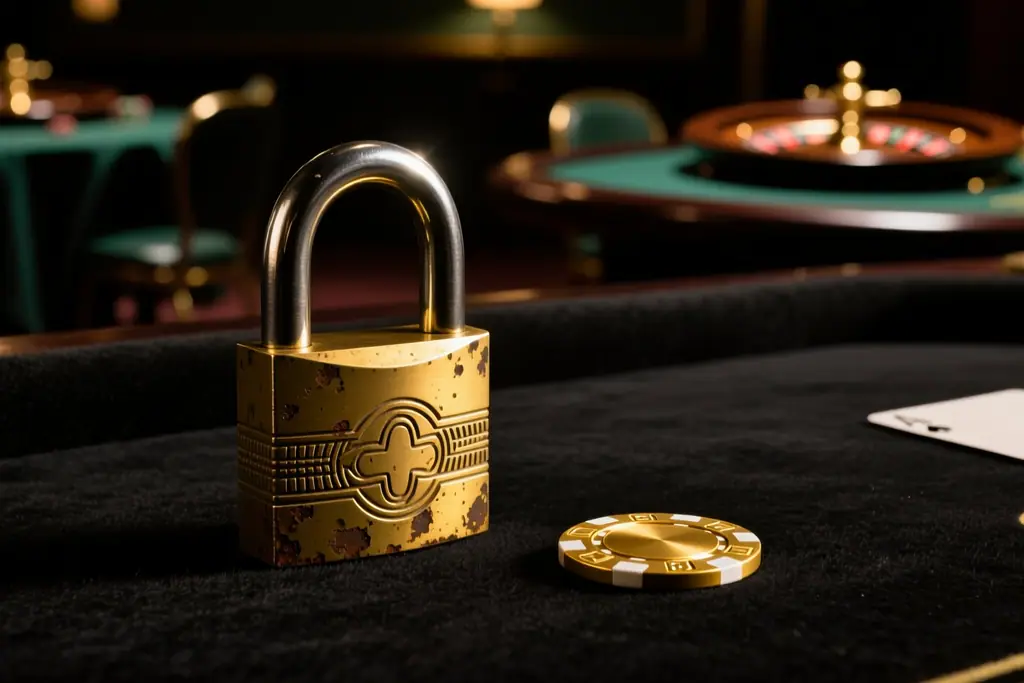
A password manager solves this properly: it generates a different password for every account and remembers them, so reuse stops being tempting. If you prefer to remember your own, use a long phrase rather than a short scramble, because length resists guessing better than symbols do.
Two-factor authentication
Where an operator offers two-factor authentication, switch it on. It means a stolen password is not enough on its own, and it defends against exactly the kind of account takeover that clones and phishing pages are built for. The protection is disproportionate to the small effort of enabling it.
If a login arrives from an unfamiliar device or location, that is the moment two-factor proves its worth. Treat any unexpected login notification as real until you have checked, and change the password immediately if you have any doubt.
Recognising phishing
- Messages urging you to log in urgently to keep a bonus.
- Links that do not match the operator’s usual domain.
- Requests for your password, full card details or a one-time code.
- Attachments or downloads you did not ask for.
- Offers that only exist inside the message and not on the site.
The defence is the same each time: do not use the link, open the operator’s site directly, and check your account there. If the message was genuine, the information will also be waiting in your account, and if it was not, you have just avoided the entire problem.
Public networks and shared devices
Avoid signing in to a casino account on public or untrusted Wi-Fi, and avoid shared computers altogether. Sessions can persist after you leave, and on a shared device the next user may inherit an open account rather than merely a browser history.
If you do play on a shared device, use a private browsing window and sign out explicitly when you finish. The habit costs seconds, and it removes the most common accidental exposure of an account that is otherwise well protected.
Keeping track of sessions
Most accounts show active sessions or login history. Checking it occasionally is a quick way to notice a device you do not recognise, and to end any session you did not start. If you find one, change the password and contact support rather than simply closing the session.
Support can also help with verification and account recovery if something does go wrong. Having your documents ready and your contact details accurate makes that process manageable rather than painful.
Bonuses and security together
Bonus offers are a favourite hook for phishing, because they create a reason to click and a reason to hurry. The same rule always applies: verify the offer on the operator’s own site and in its terms, never on the strength of the message that announced it.
The same rule applies to bonus codes and one-time passwords: nobody legitimate ever needs them from you, and anyone who asks is not on your side. Treat every request for a code as an attempt on the account until proven otherwise.
| Risk | Practical defence | Where to check |
|---|---|---|
| Password reuse | A unique password per account | Your password manager |
| Account takeover | Enable two-factor authentication | Account security settings |
| Phishing links | Never log in through message links | Operator site and terms directly |
| Public networks | Avoid or use private browsing | Your own device settings |
| Forgotten sessions | Review login history occasionally | Account activity section |
A unique password, two-factor where offered, and a habit of checking the operator’s own site are enough to defeat the overwhelming majority of attacks. The rules that matter are yours, not the bonus terms — and no bonus, strategy or prediction can guarantee a win regardless of how well you secure the account.
Read next
Spotting bonus scams and fake offers
Guaranteed-win promises, cloned pages and paid “hacks”.